

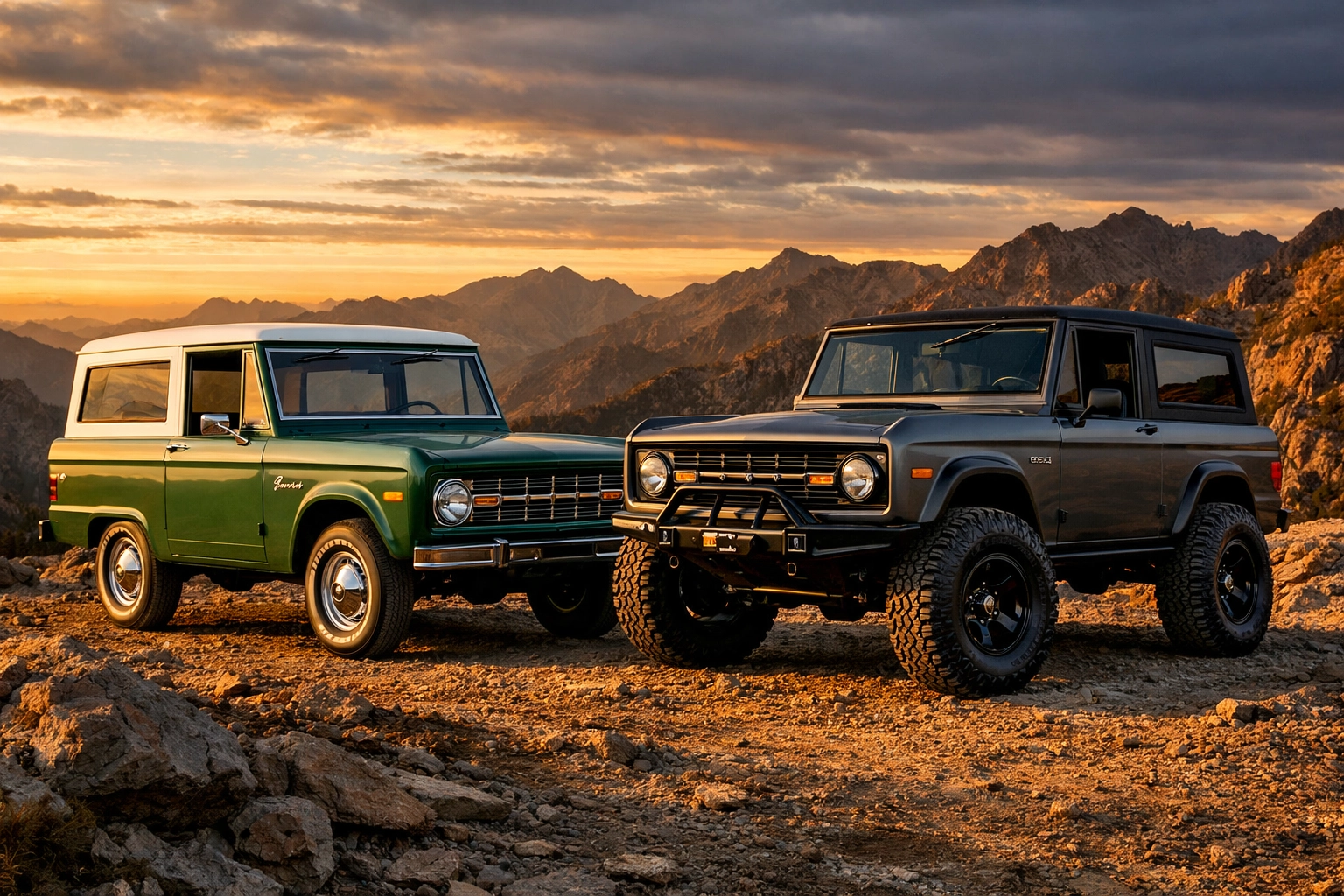
If you’re reading this, you probably understand the magnetic pull of the 1966-1977 Ford Bronco. It’s more than just a truck; it’s an American icon that defines the "Early Bronco" (EB) era. Whether you’ve got a rusted-out shell sitting in your garage or a clean "survivor" that needs a mechanical overhaul, the path to a finished build is paved with tough decisions and a lot of grease.
At Sexton Offroad, we’ve been living and breathing these rigs for over 30 years. From our deep-rooted partnership with Dusty Broncos to our hands-on experience in the shop, we’ve seen every configuration imaginable. We know which parts bolt right up and which ones require a "big hammer" approach. This guide is designed to help you navigate the massive world of Early Bronco parts, so you can build a rig that’s as capable on the trail as it is eye-catching at the local meet.
1. The Great Debate: Restoration vs. Restomod
Before you buy your first bolt, you need to decide what kind of life your Bronco is going to lead.
The Pure Restoration ($$ to $$$)
Best For: Collectors, purists, and those who want a rolling time capsule.
An original restoration focuses on period-correct parts. You’re looking for 3-speed manual transmissions, manual steering, and the original 170 or 200 cubic inch straight-six engines (though the 289 and 302 V8s were factory options later).
- Pros: High resale value to collectors; classic aesthetic; simpler mechanical systems.
- Cons: Drives like a 1960s tractor; lacks modern safety features; harder to keep up with modern highway speeds.
The Restomod ($$$ to $$$$)
Best For: Daily drivers, weekend warriors, and off-road enthusiasts.
Restomodding takes the classic EB body and stuffs it with modern technology. Think fuel-injected Coyote engines, 4-wheel disc brakes, and air conditioning.
- Pros: Reliable performance; comfortable ride; superior off-road capability.
- Cons: Higher initial cost; requires more complex wiring and fabrication.
2. Suspension: The Foundation of Performance
The factory Early Bronco suspension was built for utility, not comfort. If you’re still running 50-year-old leaf springs, your spine probably knows it. Upgrading your suspension is the single best way to change how your Bronco feels.
2.5-Inch Lift Kits ($$)
Best For: Mild off-roading and maintaining a classic look with 31 to 33-inch tires.
This is the "sweet spot" for many EB owners. It provides enough clearance for larger tires without requiring massive modifications to your steering geometry or driveshaft angles.
- Overview: Includes front coil springs, rear leaf springs, and upgraded shocks.
- Performance Impact: Significant improvement in ride quality over stock; better articulation on the trail.
- Pros: Easier entry/exit than taller lifts; less stress on drivetrain components.
- Cons: Limited clearance for 35-inch tires without trimming fenders.
3.5-Inch and Higher Performance Kits ($$$)
Best For: Serious trail use and fitting 35-inch tires.
When you move to a 3.5-inch lift, you’re entering "trail beast" territory. This setup usually requires extended radius arms and adjustable track bars to keep everything centered.
- Overview: High-travel coils and multi-leaf packs designed for maximum flex.
- Performance Impact: Dominates rock crawling and uneven terrain.
- Pros: Aggressive stance; incredible off-road capability.
- Cons: Requires more supporting mods (longer brake lines, steering corrections); higher center of gravity.
For a deeper dive into choosing the right height and setup, check out our guide on choosing the right suspension lift kit.
3. Steering and Handling: Regaining Control
If your Bronco has "death wobble" or requires two hands and a prayer to stay in your lane, it’s time to look at the steering system.
Power Steering Conversion ($$$)
Best For: Anyone who actually wants to drive their Bronco.
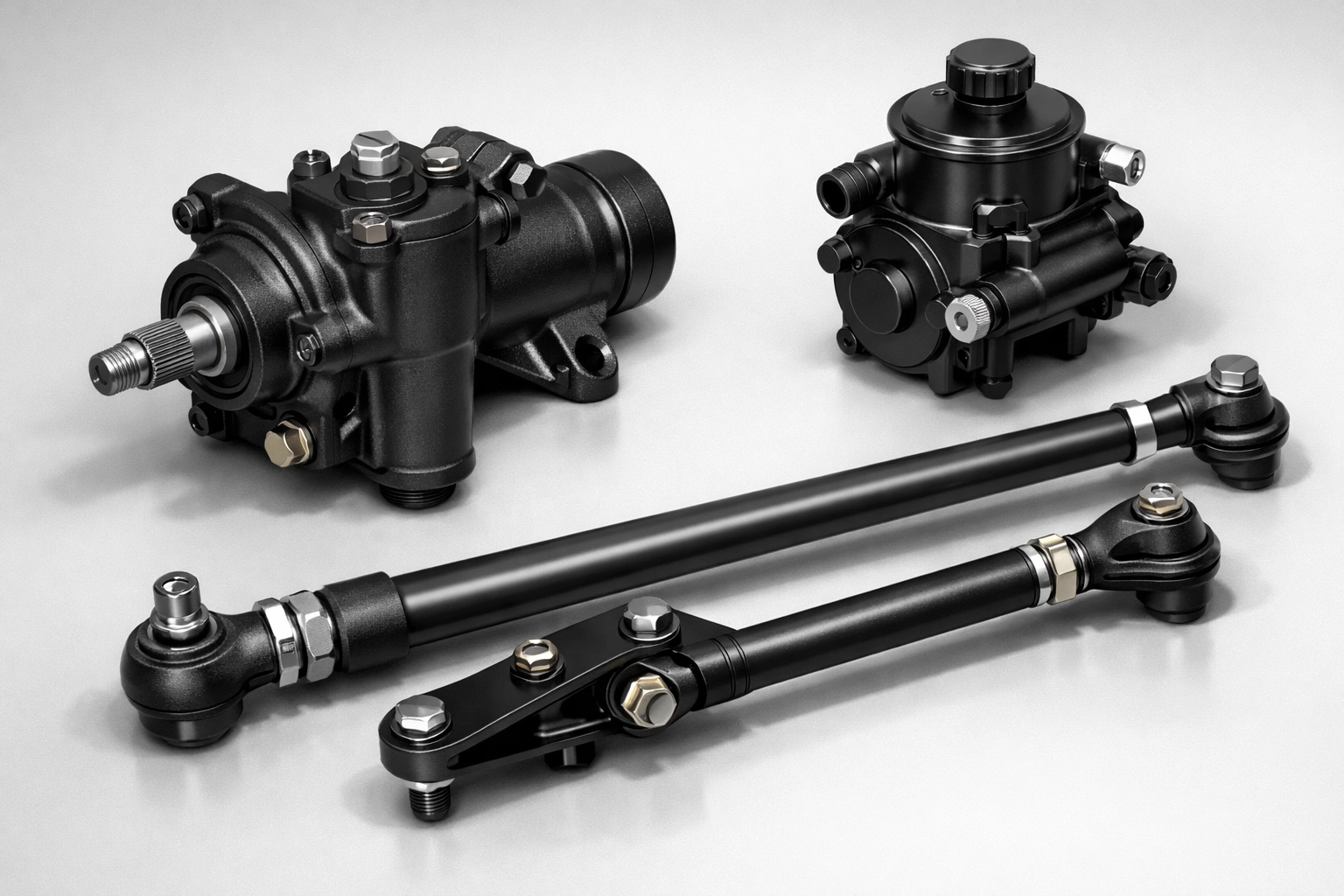
Original manual steering is a workout. A power steering conversion is arguably the most popular upgrade in the EB world.
- Pros: Effortless low-speed maneuvering; crucial for larger tires.
- Cons: Requires engine bracket modifications and a new steering box.
Heavy-Duty Steering Linkage ($$)
Best For: Off-roaders who don't want to get stranded by a bent tie rod.
Stock steering linkages are thin and prone to bending when they kiss a rock. Upgrading to a heavy-duty "T" or "Y" style setup with heim joints or oversized tie rod ends is a must.
- Pros: Bulletproof durability; tighter steering feel.
- Cons: Can be overkill for strictly street-driven rigs.
4. Drivetrain: The Grunt Under the Hood
The Early Bronco drivetrain is legendary for its toughness, specifically the Dana 20 transfer case and the 9-inch rear axle. However, modern upgrades can make that power more accessible.
The Engine: 302 V8 vs. Modern Swaps ($$ to $$$$)
Most EBs came with the 289 or 302 V8. These are great engines that are easy to work on. However, many owners are now opting for EFI (Electronic Fuel Injection) conversions or full "Coyote" 5.0L swaps.
- EFI Conversion: Best for reliable starting and better fuel economy without replacing the whole engine.
- Coyote Swap: Best for those who want 400+ horsepower and modern reliability.
Transmission: Adding an Overdrive ($$$)
The original 3-speed manual (the "three on the tree") is classic but makes highway driving a screaming, high-RPM nightmare.
- AX15 or NV3550 5-Speed Swaps: These provide an overdrive gear, allowing you to cruise at 75 mph without the engine sounding like it’s about to explode.
- Automatic Swaps (4R70W): A favorite for restomods, offering smooth shifts and great highway manners.
5. Brakes: Stopping is Just as Important as Going
Drum brakes were standard on Early Broncos, and frankly, they’re terrifying in modern traffic.
Front Disc Brake Conversion ($$)
Best For: Every single Early Bronco on the road.
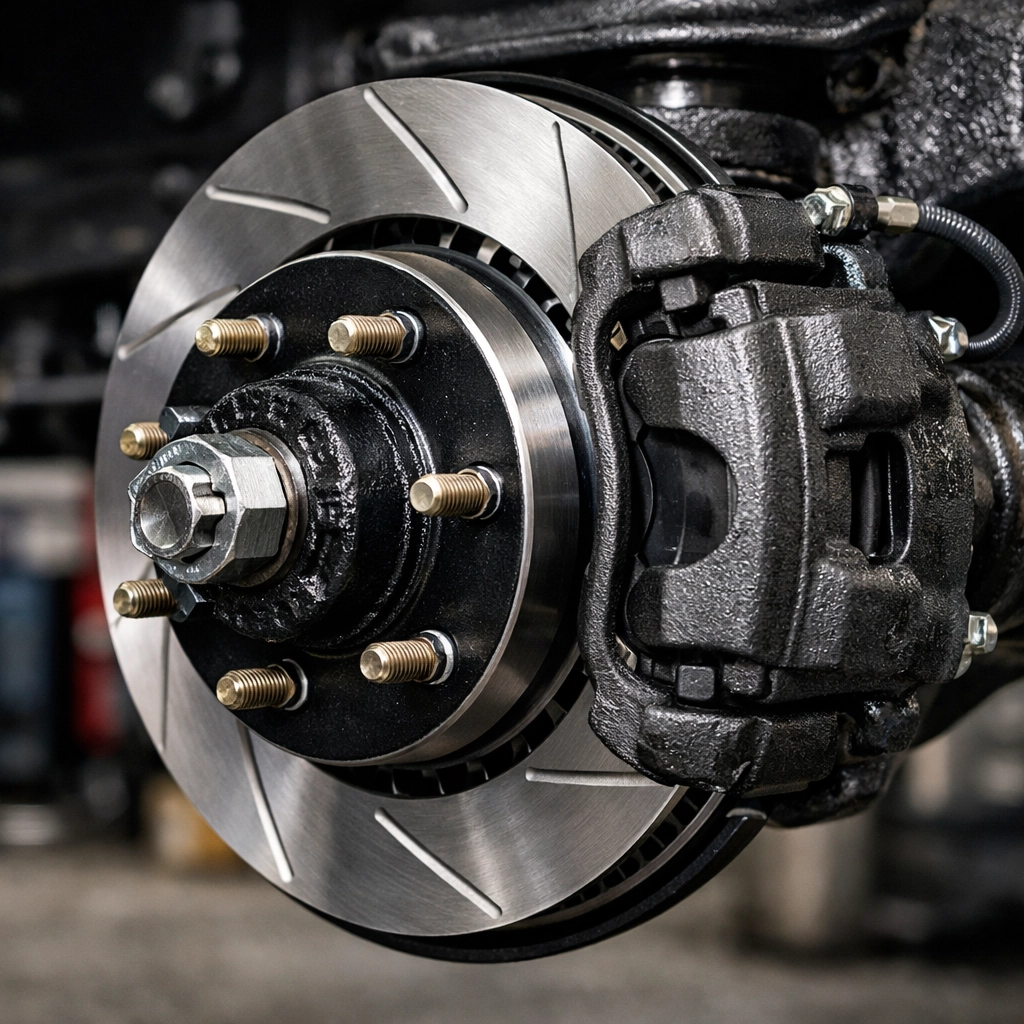
Converting the front end from drums to discs is a non-negotiable safety upgrade.
- Pros: Consistent stopping power; no more "pulling" to one side when braking; easier maintenance.
- Cons: Requires 15-inch or larger wheels that clear the calipers.
Power Brake Booster ($$)
Adding a vacuum booster or a hydroboost system (which uses power steering pressure) reduces the effort required to mash the pedal.
- Pros: "Modern car" brake feel.
- Cons: Takes up significant space in the engine bay.
6. Body and Armor: Style and Protection
Rust is the mortal enemy of the Early Bronco. Whether you’re replacing floor pans or adding protection for the trail, the body is where the personality of the build truly shines.
Replacement Panels and Rust Repair ($ to $$)
From rocker panels to quarter panels, nearly every piece of the EB body is now reproduced. If you’re building a rig, start with a solid foundation.
- Best For: Restoring structural integrity.
- Pros: Makes your rig look brand new; stops further decay.
Off-Road Bumpers and Armor ($$ to $$$)
If you plan on hitting the trails, you need protection. Standard chrome bumpers look pretty, but they won't stand up to a rock.
- Armor Kits: We offer a variety of armor and body armor kits specifically designed to take the hits so your sheet metal doesn't have to.
- Pros: Winch mounting points; recovery tabs; aggressive look.
- Cons: Adds weight to the vehicle.
7. Interior: The Driver’s Experience
You spend 100% of your time inside the rig, so don’t neglect the interior.
Seats and Safety ($$ to $$$)
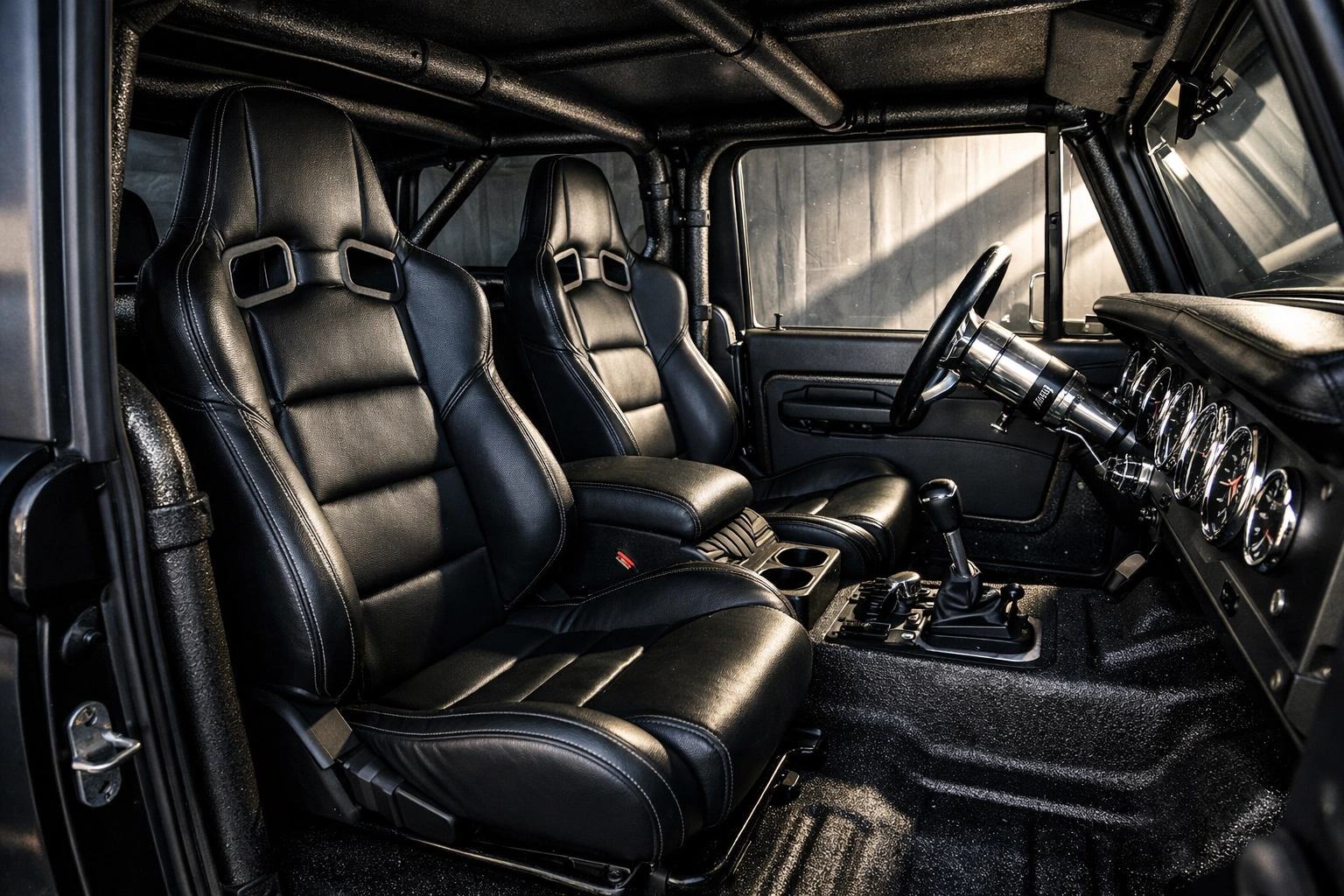
Factory low-back seats offer zero head protection and very little lateral support.
- Upgrade: High-back seats with 3-point seat belts or a 4-point harness.
- Roll Cages: A family-style roll cage is a top priority if you’re carrying passengers, especially in a vehicle with a removable top.
Wiring and Electronics ($)
Old Bronco wiring is a fire hazard waiting to happen.
- Solution: A complete rewiring kit from companies like American Autowire. This simplifies the addition of modern lights, radios, and EFI systems.
Final Thoughts: Building Your Legacy
Building an Early Ford Bronco is a marathon, not a sprint. Whether you’re going for a showroom-quality restoration or a trail-ready restomod, the key is using quality parts and relying on expertise that understands these unique machines.
At Sexton Offroad, we’ve spent three decades figuring out what works. Our partnership with Dusty Broncos ensures we have the specific knowledge to help you choose the right components for your specific goals.
Your EB Decision Tree:
- Strict Budget? Start with safety: Disc brakes, new wiring, and fresh bushings.
- Daily Driver? Focus on comfort: Overdrive transmission, power steering, and EFI.
- Trail Rig? Go big: 3.5-inch lift, 35-inch tires, 4.56 gears, and heavy-duty armor.
Ready to start your build? Browse our full collection of parts or dive into more technical advice on our 4x4 blog. If you’ve got questions about fitment or specific builds, don't hesitate to reach out. We’re here to help you keep these legends on the road: and the trail( for another 50 years.)